戻る

 NZで発売されている雑誌「New Zealand Woman's Weekly on 27 October 2008」で紹介された記事。
Unicef大使であるHayleyが、久しぶりにGhanaを訪れました。


HAYLEY'S HEARTFELT MISSION
Singing sensation Hayley Westenra is using her star power to make a difference
 

When Kiwi singer Hayley Westenra returned to Ghana in northwest Africa last month, it was amid a tumble of emotions. While she had fond memories of the friendly children who had swarmed around her on her first visit as UNICEF's youngestever Goodwill Ambassador in 2005, she also had feelings of guilt.
"The contrast between our privileged life in the West and Ghana, where the per capita income is just $15 a week, is just so great," she explains. "Everyone I have spoken to about visiting a developing country talks about the guilt they feel."
Hayley's whirlwind four-day visit took her from the bustling capital of Accra to the arid plains of rural northern Ghana, where she met children benefiting directly from UNICEF programmes providing safe water, hygiene and sanitation education in an effort to reduce child mortality.
In Savelugu in northern Ghana, Hayley visited a Guinea worm containment centre where she saw firsthand the terrible impact drinking water contaminated with the Guinea worm parasite has on children.
Once the water-borne larvae get into children's bodies, they grow into worms up to a metre long that cause painful swelling and blisters as they emerge.
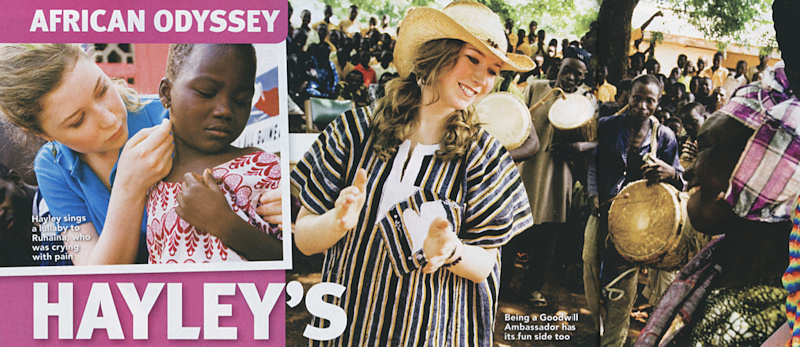
Hayley comforted seven-year-old Ruhaina who was among the 20 patients being treated at the centre. Ruhaina had been crying ever since her father brought her in three days earlier from their village 18km away. He stayed with her for two days, but she was left all alone at the centre when he had to return to work.
Hayley held Ruhaina as her infected foot was washed and bandaged, hugging her close and singing the Maori lullaby Hine E Hine. Hayley also gave Ruhaina some colourful stickers and they blew bubbles together helping to distract the little girl.

"Guinea worm affects children under 16 the most," says Hayley, "because they're more likely to play in or drink from infected water sources. But I am very pleased to hear that great progress is being made in reducing the incidence of the worm.
In 1989 there were almost 180,000 reported cases, but the annual total is now down to just 415.
"Kindergarten children are the perfect age to be absorbing new ways of thinking, so if they grow up with a water pump in their school, then it becomes a natural part of their lives. They grow up drinking safe water."
A particular highlight of Hayley's visit was the opportunity to meet some of the almost 6000 girls from deprived rural communities who have benefited from her Bikes for Ghana programme.
"The bikes programme has proved a great success for girls who have to commute long distances from home to school," says Hayley. "The bikes are a practical and cost-effective way for girls to get to school quickly and safely, as well as boosting their school attendance rates and academic performance."
Teenager Zakaria recounted how before she got a bike, household chores and walking the 5km to and from school meant she only had time to go to school two days a week. Now, with a bike, she can go to school every day, do all her chores and even have time left over for study.
Hayley says that after revisiting Ghana she is feeling very positive about the country's outlook and UNICEF's role in making a real difference in children's lives.
"I just want to see more children having bigger dreams. That's what it's all about. I encourage everyone to do whatever they can to help make that a reality."

Sally Thompson

To find out more or to support UNICEF's work, visit the website www.unicef.org.nz


戻る